


With the official closure of high-mountain waters, many anglers pack away their rods until spring. However, for those of us who view fly fishing as a continuous connection with the river ecosystem, the closed season is not a period of inactivity, but a transition toward a more technical, reflective, and conservation-minded practice.
Below, we break down the key priorities for tackling these winter months in the Catalan Pyrenees with rigor and responsibility.
1. Biology and Conservation: Strict Protection of Redds and Native Trout
Late autumn and early winter coincide with the most critical biological cycle for the brown trout (Salmo trutta): the spawn (redd building). Spawners migrate upstream toward headwaters and tailouts with clean, well-oxygenated gravel to deposit their eggs in redds.
In this scenario, the behavior of the sport angler must be exemplary:
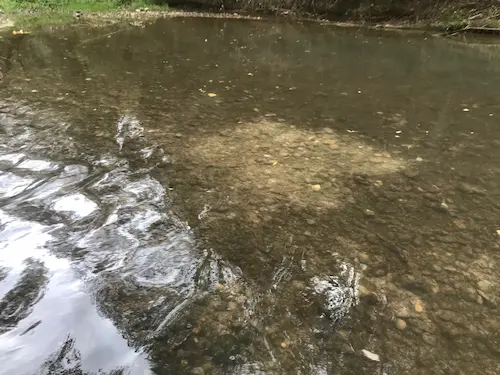
- Redd Identification: You must completely avoid wading across moderate-current areas with clean, fine pebble substrates that “gleam” due to the females’ digging action. Stepping on these redds causes the direct destruction of hundreds of embryos.
- Non-Interference Criterion: Spawners are easily visible on shallow redds. Any attempt at sight fishing or harassing these fish during the spawning period severely compromises the recruitment of the following season’s cohort.
- Field Ethics: Winter is the optimal time for passive scientific observation, analyzing the morphological evolution of river stretches and the presence of microhabitats after the first autumn spates.
2. Technical Strategy for Winter Fishing in Open Stretches
Fishing in regulated tailwaters or winter catch-and-release reserves requires a radical shift in mindset compared to the regular season. With very cold water temperatures, trout behavior changes due to a slowed-down metabolism.
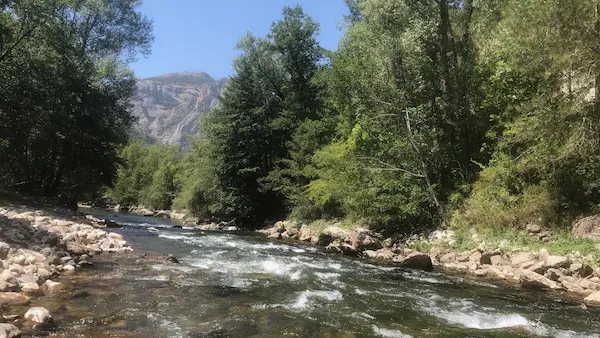
- Water Reading: Forget about aggressive streamer retrieves mid-column. Fish seek energy conservation in slow-velocity seams, deep pools, and steady, gentle runs where the velocity gradient is minimal.
- Precision Euro-Nymphing: The use of slim profiles with heavy tungsten beads (3.5 mm to 4 mm) is essential to ensure the fly literally tumbles along the bottom substrate. Drifts must be dead-drift and millimetric, imitating the natural movement of caddis or mayfly nymphs.
- Surface Activity Windows: Should a slight thermal bump occur during the midday hours (12:00 PM – 2:00 PM), sporadic hatches of Baetis or midges can happen. Having patterns tied on #18 to #22 hooks is your only reliable option for a successful dry fly approach.
3. The Winter Laboratory: Material Testing and Gear Maintenance
The lack of angling pressure makes winter the ideal testing lab to tune up your gear at the tying bench or workshop:
- Leader Calibration (Tippets): The extremely clear and cold winter water demands high-performance fluorocarbon in fine diameters (0.10 mm – 0.12 mm) with calculated tapered profiles to prevent drag and line flash.
- Specific Pattern Design: Use the tying desk to tie tactical high-visibility nymphs (perdigones with hot spots in fluorescent orange or UV green) and test their hydrodynamic sink rate.
- Line Behavior Analysis: Take advantage of winter outings to test different line profiles and weights with the same rod, evaluating loading distance at close quarters and presentation delicateness in broken or slow water.
- Gear Tuning: Inspect rods and reels. Clean fly lines to restore floatability and prevent cracking. Check your waders for pinhole leaks and hang them dry in a cool place. Restock your fly-tying materials as needed.
4. Balance and Reflections: Climate Change and Responsibility in Catch and Release
Closing the season forces us to reflect deeply on the health of our river ecosystems. Beyond any single river or basin, the reality of climate change is fully visible in the behavior of our continental waters.
Progressive increases in ambient temperatures and prolonged drought periods cause water warming, which directly reduces available dissolved oxygen. Under these conditions, trout experience severe physiological stress: they become sluggish, seek thermal refuges, and lose responsiveness.
As river conservation organizations such as AEMS – Ríos con Vida have long pointed out, catch-and-release fishing in these scenarios demands extreme responsibility. When water is warm and oxygen-depleted, a prolonged fight exhausts the fish’s energy reserves to the limit; even if the trout swims away seemingly fine post-release, the risk of delayed mortality due to stress and anoxia skyrockets.
The future of sustainable fishing in Catalonia relies on anglers understanding that caring for the river goes far beyond releasing a fish: it means shortening fight times to a minimum, avoiding lifting trout out of the water for photos, strictly disinfecting boots and nets between basins to stop invasive pests, and above all, knowing when to stop fishing when thermal conditions threaten fish survival.