


Spring in the Pyrenees is a season of contrasts and, lately, rapid changes. While decades ago we knew exactly when the snow would start to melt, due to climate change, the snowmelt is becoming earlier and more unpredictable. This phenomenon forces us, as anglers, to be much more adaptable and to keep a close eye on rivers that run fast, cold, and high.
While the valleys turn green, the rivers run wild. Many anglers view high flows with suspicion, but the reality is that with the right technique and local knowledge, trout fishing during the snowmelt can be one of the most rewarding times of the season, offering a chance at the largest specimens. Here is how to navigate the river during these weeks and why, now more than ever, local expertise is your best asset.
1. Safety First: The River Never Forgets
Before casting your first nymph, you must realize that the river is a hostile environment right now. The combination of freezing water and powerful currents can turn a fishing day into an unnecessary risk.
- Avoid Hazard Zones: During snowmelt, stay away from narrow canyons or deep pools. The water’s force in these areas is completely unpredictable.
- Water Temperature: Meltwater can be just a few degrees above freezing. A fall can lead to hypothermia very quickly.
- Traction Gear: Our essential “pro-tip”: use wading crampons or boots with tungsten studs. The sediment and silt carried by the floods make the rocks more slippery than ever.
- Don’t Go Alone: Never fish alone in these conditions. Going with a partner who knows the stretch or, better yet, a LOCAL FISHING GUIDE, ensures your safety and a proper reading of the safe wading zones.
2. Fly Fishing Strategies for High Water
Where are the trout when the river is bank-full? The answer is simple: where they spend the least energy. Trout don’t want to fight the main current; they look for thermal and hydraulic shelters.
Where to Fish?
Focus on the river margins, eddies, and any spots where the flow slows down. Any large boulder breaking the current can hold a trophy trout waiting for food to drift by.
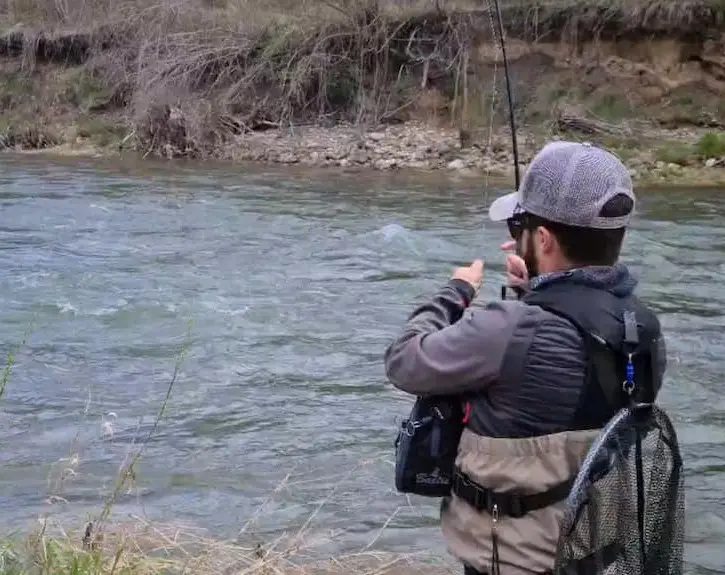
The Winning Technique: Euro Nymphing
In 95% of your spring outings, nymphing (specifically Euro nymphing) will be your best ally. It allows for total drift control and gets your flies to the bottom fast.
- Heavy Nymphs: Use “perdigons” and highly hydrodynamic nymphs. Tungsten beads should be heavy: 3.3mm, 3.5mm, or even 3.8mm to cut through the water pressure and sink rapidly.
- Bright Colors: In murky or “snow-flavored” water, flashes of color (hot spots in orange, purple, or chartreuse) help the trout locate your fly.
- Stronger Tippets: Don’t be afraid to size up your fluorocarbon. A 0.12mm to 0.14mm (4X/5X) is ideal. Since the trout haven’t been “pressured” yet and the current is strong, you need the power to land them quickly before they bolt into the heavy flow.
Pro Tip: While nymphs rule the day, watch the midday window. If the temperature rises slightly, you might see a short window of surface activity with sporadic Baetis hatches.
3. Gear and Expert Tips for Spring Fishing
To avoid going home frustrated or frozen, keep these technical details in mind:
- Monitor Water Flows: Before heading out, check the CHE (Ebro Hydrographic Confederation) website. Checking the m³/s in real-time will save you wasted miles and disappointment.
- Specific Rods: We recommend long nymphing rods, between 10.6 and 11.6 feet, with a minimum line rating of 3wt. This length helps keep your line out of conflicting currents.
- Thermal Protection: If you feel the cold, don’t hesitate: neoprene waders or 5-layer breathable waders with high-quality thermal base layers are a must. Warm feet equal a happy angler.
Want to Experience an Unforgettable Fishing Day in the Pyrenees?
Fishing during the snowmelt is a technical challenge that requires experience. If you want to learn how to read the river in these specific conditions, improve your nymphing technique, or simply let us find the best spots where trout are active right now, book your guided trip with us.
We know every stone in the river and we know where the trout hide when the water rises. We look forward to seeing you on the water!