


Planning a fishing trip to the Catalan Pyrenees can be quite a challenge. The mountain climate, the spring runoff, and the changing behavior of the trout make every month of the season a completely different world. To help you make the most of your days on the river and know exactly what to put in your fly box, we have prepared this month-by-month guide with the best conditions, safety tips, and the most effective flies.
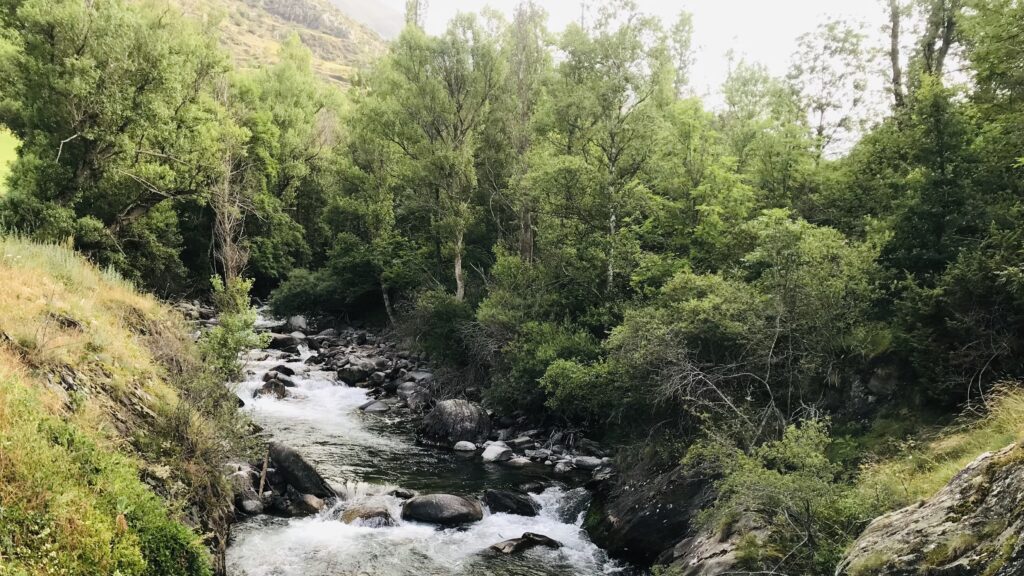
The Pyrenees Fishing Calendar: Month by Month
- March (Season Opener and Trophy Fish)
- Conditions: The water is very cold and flows at medium to high levels. General trout activity is low due to the water temperature, but it is an excellent time to target large specimens (trophy fish) that are on the move looking for easy food after the winter. (Remember that the third Saturday in March officially opens the season in low-mountain waters).
- Flies and Rigging: Heavy nymphs, well-weighted streamers to search the deep pools, and occasionally large, dark or brown dry flies (such as the classic March Browns or pardones).
- April (Spring Runoff Alert)
- Conditions: This month is heavily marked by the beginning of the snowmelt. River flows are highly unstable, the water runs muddy/turbid, and approaching certain stretches can be dangerous. We recommend extreme caution.
- Where to fish: This is not a recommended month for high-mountain freestone rivers. It is the ideal time to focus your activity on tailwaters (intensive zones), low-altitude lakes, and reservoirs where the strong current is not an issue.
- May (Peak Snowmelt)
- Conditions: We are right in the middle of the peak spring runoff in the main rivers of the Pyrenees. The water flows very high, fast, and cold, making river fishing practically impossible or highly discouraged. (The second Saturday in May marks the opening of the high-mountain waters, although the rivers remain very difficult).
- Where to fish: We continue to recommend avoiding the main rivers. Focus your efforts on intensive managed zones, early-thaw mountain lakes, and reservoirs.
- June (The Golden Era of the Pyrenees)
- Conditions: Without a doubt, one of the best times of the year. The runoff begins to recede, rivers return to correct and stable levels, the water reaches an optimal temperature, and the trout are fully active and eager to feed.
- Flies and Rigging: Medium-sized nymphs and all kinds of dry flies. Frequent hatches of mayflies and caddisflies begin, offering unforgettable dry fly fishing sessions.
- July (Summer Fishing and Late Evening Hatches)
- Conditions: Hot summer weather. During the middle of the day, the sun warms up the water and fish activity drops drastically. In contrast, first thing in the morning and during the very last hours of the day (serenos), conditions are ideal with moments of intense rising activity on the surface.
- Flies and Rigging: Small to medium nymphs and more subtly sized dry flies. Hopper-dropper rigs (tándems) and small terrestres (such as ants or beetles) work wonders close to the riverbanks.
- August (Low Flows and High Mountain)
- Conditions: Similar to July, standing out for river flows dropping to their lowest levels of the season. The heat is noticeable, so you need to look for fast, well-oxygenated water, or hike up to target high-mountain creeks and alpine lakes (estanys). Activity is concentrated in the morning and during the twilight hours.
- Flies and Rigging: Small nymphs and very discreet dry flies (hook sizes 16 to 20) to avoid spooking the fish. Terrestrials remain a safe bet.
- September (The Return of Peak Activity)
- Conditions: Temperatures begin to drop and the water reactivates thermally. It becomes once again one of the best times of the year for river fishing. (Keep an eye on regulations: at the beginning of September, the harvest/catch-and-keep modality usually closes, continuing only as catch and release).
- Flies and Rigging: Dry flies and nymphs of all types, preferably unweighted or very light to achieve a completely natural drift. The water runs crystal clear and the trout are particularly spooky and wary.
- October (The Frenetic Closing)
- Conditions: The month of changing weather and, often, the peak activity period for large trout. The fish need to feed heavily to build up fat reserves before the winter cold and the upcoming spawning season. (The general catch-and-release season usually closes in mid-October).
- Flies and Rigging: Very natural imitations and flawless drifts with dry flies or nymphs. It is also a great time to swing or strip small streamers to trigger the territoriality and aggressiveness of the large male trout.
“Pescacatalunya” Tips for Your Trips:
- Biodiversity and Regulations: Remember that in Catalonia, felt-soled wading boots are strictly prohibited to prevent the spread of invasive species. Make sure to wear rubber soles with studs.
- River Stewardship: Especially at the end of the season (September/october), practice strict catch and release and revive the trout properly before letting them go; many females are already carrying the eggs of the next generation.