


There are days on the river when it feels like there isn’t a single trout around. We walk for miles, constantly change flies and try different currents without any response. But many times, the problem is not the lack of fish — it’s simply not understanding what the river is telling us.
Learning how to read a mountain river is probably one of the most important skills in fly fishing. In the Pyrenees, where rivers constantly change depending on water flow, temperature and season, understanding the water makes the difference between fishing blindly and truly knowing where trout may be holding.
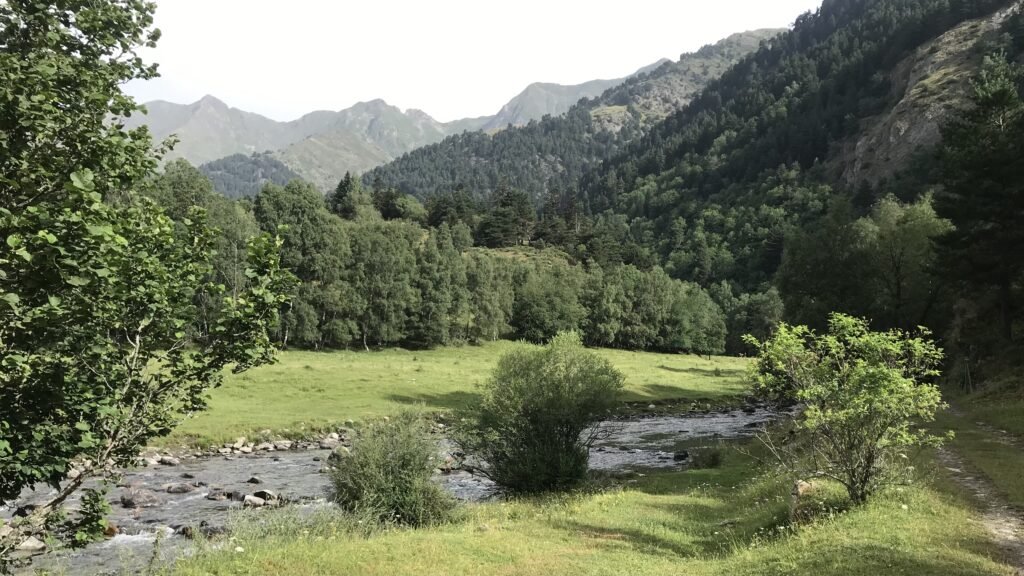
The rivers of Pallars Sobirà, Pallars Jussà and Alta Ribagorça offer an incredible variety of currents, pools and mountain sections where every detail matters.
Why Trout Are Not Randomly Distributed
A trout does not occupy just any place in the river. It is always looking for three things:
- food
- protection
- spending as little energy as possible
That’s why trout usually position themselves where the current brings food while still allowing them to stay protected from predators and strong water flow.
Once you understand this, the river starts to make sense.
The Best River Spots to Find Trout
Side Currents
Very often, trout prefer secondary currents instead of the main flow. These areas have less water pressure while still carrying food.
They are especially productive in fast Pyrenean rivers.
Large Rocks and Obstacles
Big rocks break the current and create calm pockets just behind them. These “water shadows” are classic holding spots where trout wait for food with minimal effort.
During bright days or heavy fishing pressure, these refuges can become extremely productive.
Pool Entrances and Exits
Changes in depth create oxygenation and food movement.
The entrance of a pool is often one of the most active sections of the river, especially during insect hatches.
The tail-out, on the other hand, usually works very well with nymphs or small streamers.
Foam Lines and Slow Currents
Foam lines accumulate insects and food carried by the current. Although they may seem calm, they often hide very active trout.
Many anglers walk past these spots too quickly.
Shadows and Vegetation
During summer, shadows created by trees or riverbanks can completely determine fish activity.
Trout look for stable temperatures, safety and oxygen. That’s why sections with vegetation are usually much more productive during the brightest hours of the day.
Common Mistakes When Reading a River
One of the most common mistakes is entering the water too quickly.
Many trout in Pyrenean rivers feed very close to the bank, especially in smaller streams and mountain creeks. Walking into the water before observing can easily spook fish you never even noticed.
Other common mistakes include:
- focusing only on deep water
- making too many vibrations while walking
- ignoring light direction
- fishing too quickly
- failing to observe insect activity
Very often, spending two minutes observing the river is more useful than changing flies five times.
How the River Changes Throughout the Seasons
Each season completely transforms trout behaviour.
Spring
During snowmelt, water levels rise and trout seek protected areas away from the strongest currents.
Riverbanks, slower currents and pool entrances usually become key holding areas.
Summer
Water levels drop and clarity increases. Trout become more cautious and look for shade, oxygen and feeding activity during the first and last hours of the day.
It is one of the best periods for dry fly fishing in many Pyrenean rivers.
Autumn
Autumn usually brings softer light and less fishing pressure.
Trout actively feed before winter and can show intense feeding windows during specific moments of the day.
Learning to Observe Before Casting
Over the years, you realise that the best anglers are not the ones who cast the most, but the ones who understand the river best.
Observing the current, light, insects and shadows is often more important than the exact fly tied to the leader.
Pyrenean rivers are constantly changing, and that is precisely where much of their magic lies: every day is different and every section tells a new story.
Learning to read a river is not only a fishing skill. It is a different way of connecting with nature.